

Comment gagner au casino: Bankroll and Limits
Winning at a casino means ending a session with more money than you started with, but the outcome depends on chance instead of skill in most games. The house edge describes the built-in percentage the operator expects to retain over time, which makes consistent long-term profit unlikely. A player can still finish ahead in a single session, yet the odds remain structured against repeated wins. Practical control comes from choosing games with a lower edge, setting a fixed bankroll, and stopping when that amount is gone. Treat each bet as entertainment spending, not as a way to earn income or solve financial problems. This distinction shapes every realistic decision that follows.
What Winning at a Casino Actually Means
A win at a casino is a single payout, not a measure of profit. It means the game returned more than the wager on one hand, spin or round. The casino pays it because a random result landed in the player’s favour. That result is independent of the previous one and of what happened at another table.
Woo casino bonus codes 35x wagering seven days
The distinction that matters is between the payout and the expected value. A payout is what the machine hands over for a specific outcome. Expected value is the average return you get over many repetitions, and it is set by the payout schedule and the probability of each outcome. The casino’s advantage comes from paying less than those probabilities would warrant. Over a few hands the player can be ahead. Over a long session the mathematical edge pushes the average back toward the expected value.
| What you see | What determines it | Who it benefits | Short-term result | Long-term expectation |
|---|---|---|---|---|
| A win | One random outcome matching a payout line or combination | Player, for that round | Positive cash flow | Reversed by the house edge |
| A loss | One random outcome not matching a winning combination | Casino, for that round | Negative cash flow | Accumulates with volume |
| A bonus or promotion | The operator’s published terms, not game math | Player only if wagering rules are met | Temporary bankroll increase | Neutral or negative once requirements are cleared |
The table separates the immediate event from the condition that governs it. A bonus looks like free money, but it only becomes a win if the player clears the wagering requirement. Until that happens the balance is not withdrawable cash.
The practical step is to separate two records while you play. Track each session’s net cash flow: money taken out minus money put in. That is your real result. The total amount wagered tells you how much exposure you accumulated. A high wagering total with a small net cash flow means the edge worked against you, even if you finished the session ahead. If the session is a loss, the edge worked and the amount wagered shows how quickly it drained the bankroll. The only reliable control is the stake size and the number of rounds you allow yourself; the outcome of any single round is outside that control.
Operator comparison: games, accounts and verification
Declining the welcome match keeps your balance free of playthrough conditions. You can request a payout immediately after identity verification clears, shifting the decision to payment processing speed.
Operators diverge on two fronts. Some prioritize backend efficiency, clearing Interac e-Transfer requests within twenty-four hours of approval. Others focus on long-term retention through loyalty tiers that accrue points based on play volume. This value builds slowly over months instead of appearing as an instant credit.
| Brand | Details |
|---|---|
| Ibizabet | IZIBET site lists sportsbooks, live betting, e-sports. |
| Rich Casino | site lists sportsbook; reviews conflict, indicating regional filtering. |
| lucky | site and reviews confirm online casino with slots, live dealer, sportsbook. |
| carnival bingo | Carnival Bingo Casino offers online bingo rooms, slots, live dealer tables. |
| Katsubet | KYC needs identity and address documents via account settings, typically resolved in 24–48h; daily withdrawal cap 5,000 EUR/USD, monthly cap around 10,000 EUR/USD; 24/7 chat and email support. |
Select fast-payout operators if you need quick access to cash. Frequent withdrawals make processing speed more valuable than potential future rewards. Look for platforms with verified clearing times under forty-eight hours. If you plan to keep an account active for extended periods, choose sites with robust VIP structures. These programs offer tangible benefits like dedicated support or higher withdrawal limits once you meet specific activity thresholds.
Ibizabet: Access to games
Ibizabet offers online casino games and sports betting.
Rich Casino: Sportsbook availability depends on your jurisdiction, not just brand presence
Sports betting is listed on the operator’s site, but external reviews sometimes say the feature is absent. That contradiction usually comes from a jurisdictional filter: the sportsbook is visible in markets where it is licensed and hidden where it is not. For a Canadian visitor, the test is straightforward. Log in or load the sports section and see whether match odds appear. If the menu item exists but no leagues load, the sportsbook is likely not configured for your location yet. Treat the sportsbook as a conditional feature instead of a guaranteed part of the package.
Fishin frenzy free spins Canada eligibility and wagering
Lucky Hunter overview: what the brand actually offers
Lucky Hunter positions itself as a hybrid operation: an online casino paired with a sportsbook. If your intent is simply slots and tables, the casino side delivers. If you are looking for the depth of a dedicated betting site — futures markets, in-play depth, same-game parlays — expect a lighter offering, since sports is described as a catalog instead of a full-blown betting product. That distinction shapes everything else you read about the brand.
carnival bingo: Getting started: age limits, registration and identity checks
Registration is simple: you provide a valid email address, choose a username and password, and enter personal details. Canadian players must be at least 19 years old to register and play. Carnival Bingo Limited may ask for identity verification using government-issued ID and proof of address before processing withdrawals, so plan for that step if you intend to cash out instead of just play for fun. Account setup is fast, but skipping verification will not stop you from playing; it will slow down your ability to withdraw winnings.
Katsubet — how wagering limits and bonus expiry shape the real value
Bonus terms are where Katsubet’s rules bite hardest. Most bonuses carry a 40x wagering requirement on deposit plus bonus, a maximum bet of 5 EUR/USD while bonus funds are active, and expire if unused within 30 days of activation. That 5 CAD max bet limit is the trap most players miss: place a single wager above it with bonus funds still active and the casino can void the bonus and any winnings tied to it. The welcome package for Canadian players gives 100% bonus plus 50 free spins on a minimum deposit of 20 CAD, while a weekend reload offers 50% bonus with a 7-day validity. Cashback runs weekly, calculated on net losses and credited automatically, though it may be capped depending on VIP level.
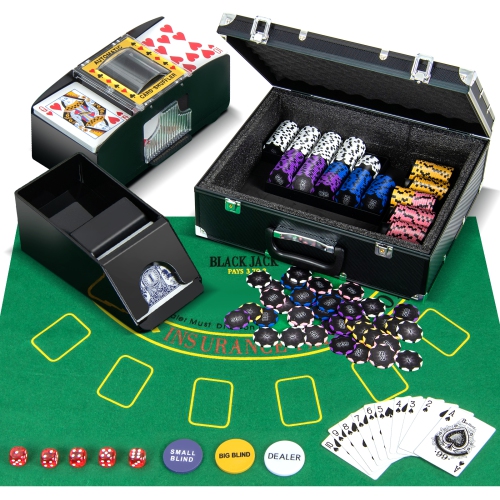
House Edge, Probability and Why the Casino Always Wins Long-Term
House edge is the percentage of each bet that the casino expects to keep over a large number of wagers. A game with a 2% house edge means that for every $100 wagered, the casino expects to retain $2 on average. This is not a fee deducted from each bet. It is the long-term result of payout structures that favour the house.
Consider a simplified example. A casino offers even-money bets on a coin flip, but the coin has two heads and one tail on a three-sided mechanism. You bet $10 on heads. When heads appears (which happens two-thirds of the time), you win $10. When tails appears (one-third of the time), you lose $10. Over many flips, you win $10 twice for every $10 you lose once, netting zero. But if the casino pays you $9 instead of $10 when you win, you collect $18 over two wins and lose $10 on the third flip, for a net loss of $2 per three flips. That $2 loss on $30 wagered is a 6.67% house edge.
Real casino games use the same principle. Roulette pays 35 to 1 on a single number, but a standard wheel has 37 or 38 pockets depending on whether it includes one or two zeroes. The true odds are 36 to 1 or 37 to 1, but the payout is lower. Blackjack uses complex rules and player decisions, but when both player and dealer bust, the player loses first. Slot machines program specific return-to-player percentages into their random number generators.
House edge applies to every bet. It does not depend on how long you play, how much you bet, or what happened on previous rounds. A player who bets $10 per hand for 100 hands faces the same house edge as a player who bets $1,000 once. The total amount exposed to the edge changes, but the percentage remains constant.
Random number generators in slots and electronic games produce outcomes that are independent events. Each spin uses a new random seed. Previous results have no connection to future results. A machine that has not paid out in an hour is not ‘due’ for a win, and one that just paid a jackpot is not less likely to pay again immediately. The probability reset with every spin.
Betting systems like Martingale attempt to exploit short-term variance by doubling bets after losses. The theory is that a win will eventually recover all previous losses plus a small profit. The problem is that table limits, bankroll exhaustion, and the house edge on every bet prevent this from working. A losing streak long enough to hit the table maximum or drain your funds is statistically certain to occur given enough play. When it does, the system fails catastrophically.
Pattern tracking in games like roulette or baccarat assumes that recent outcomes predict future ones. Players record results and bet on trends or against them. This approach misunderstands independence. A roulette wheel that shows red five times in a row is not more or less likely to show black on the sixth spin. The wheel has no memory. Each spin is a separate random event with the same probabilities as every other spin.
The house edge is not a flaw to exploit. It is the fundamental design of the game. Casinos do not rely on cheating or manipulation. They rely on mathematics that produces predictable profit over volume.
Choosing Games with Lower House Edge
Spot the difference between a label and a real advantage
A player who reads the game’s description and sees "low house edge" on one title but not another has already started to separate marketing from mathematics. What the casino calls a feature is not the same as what the mathematics calls a house edge. The edge is the built-in, long-run percentage that the game returns to the operator. It does not change from one session to the next, and it does not appear on a player’s screen as a running tally.
Consider two common formats. A game that lets a player make a low-variance choice with near-even odds keeps the edge small, so a modest bankroll lasts through many rounds. A game that relies on random outcomes and offers large, infrequent payouts keeps the same money from being returned much more slowly. The distinction matters because it determines how long a fixed amount of money lasts, not because one game is "better" in a moral sense.
Find the rule sheet before players sit down
The practical move is to read the game’s information sheet before placing a bet. That document states the rules that set the edge: which choices are available, how payouts are structured, and whether any rule shifts the odds in the player’s favour. If the sheet is not visible, the player cannot know the edge and should treat the game as unknown instead of assuming it is favourable.
A worked example makes the arithmetic concrete without naming an operator. Suppose a game has a stated edge of 2% and a player wagers $100 in total. The expected loss over those wagers is about $2, and the player keeps roughly $98 on average. Change the wagers to $1,000 and the expected loss moves to about $20. The same edge behaves differently only because the volume of play changes, not because the game became friendlier.
The choice then becomes a matter of how much variance the player accepts. Lower edge usually means smaller swings and a longer session. Higher edge games produce bigger, less frequent outcomes. Neither is a guaranteed profit, and neither is a route to income.
Multiple bingo variants including 75-ball, 90-ball, and themed bingo rooms are available.
Bankroll Management and Setting Limits
Decide the total loss before players touch a chip
Winning at a casino does not require a winning session; it requires a budget you can afford to lose. Many players arrive with a vague hope—"I’ll win tonight and leave"—and treat whatever balance remains as disposable. A bankroll is the opposite of that impulse: it is the full amount you commit to the session, and no amount of luck makes it larger.
Pay by phone casino | Phone Billing vs Cards and E-Wallets
Set the number before players sit at the machine or log in. If that amount is gone, you stop. The moment you decide to top up because you are close to breaking even, you have moved the goalpost. The house edge on every spin and hand does not care about your plan, and a larger deposit simply gives the edge more time to work.
A concrete illustration helps. Say you allocate $100 for an evening and split it into ten $10 units. That is ten independent rounds, each with the same negative expectation. A $100 bet in one spin is not ten $10 bets in disguise; the variance collapses into a single decision, and one loss ends the session with no recovery opportunity.
Set stop-loss and session limits so emotion cannot override them
Deciding when to stop is where most bankroll plans fail. Willpower is unreliable in a high-stimulus environment, so build the guardrail into the session itself. Choose a loss limit—say you quit after losing four of your ten units—and a time limit, such as two hours, whichever arrives first. When either is reached, you are done, no matter how close a win feels.
The same discipline applies to gains. A common impulse is to chase a $50 win by continuing until it turns into $100. That converts a controlled session into a gamble on the house edge. Walk away while the session is still profitable instead of giving the edge another chance.
Use hard controls instead of soft intentions. Most platforms offer limits governing deposits, loss limits, wagering caps and session timers; these are set in the account settings and cannot be undone during the active session. If the casino does not offer them, set your own timer and treat reaching it as final. The point is not to beat the casino. It is to keep the cost of entertainment at the level you chose before the first bet.
The minimum deposit amount for standard fiat currencies such as CAD is typically 10 units.
Swift casino review dispute process outside iGaming Ontario
Frequently asked questions
Can a casino change a bet after the result is known?
No. Wagers settle on the outcome at the time the result is determined, and the casino cannot alter a settled bet afterward. If you disagree with the recorded result, contact support and refer to your bet history.
Does self-exclusion cover every casino at once?
No. Self-exclusion applies to the account or site where you activate it. To block access elsewhere, you must repeat the request at each operator individually.
Can a loss limit be lifted the same day it was set?
Sometimes, but not immediately. Many sites impose a waiting period before a limit increase takes effect, while tighter limits usually apply right away.
Set Spending and Time Limits Before Your First Bet
Decide how much money and time to spend before placing a bet. A deposit limit stops further funding once the amount is used, while a session timer ends play after the set minutes. These tools act on your own account, not on chance, so they do not change odds or guarantee control over losses. Chasing lost money usually increases risk instead of recovering it. Setting both limits before the first bet creates a clear stopping point you can revisit if either boundary is reached.